
REVIEW · NEW ZEALAND SHORE EXCURSIONS
Bay of Islands Shore Excursion: Puketi Rainforest Guided Walk
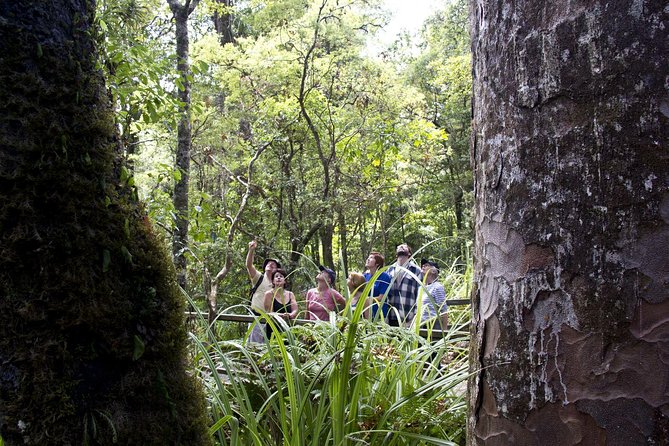
The great draw here is the chance to walk beneath ancient kauri trees, some of New Zealand’s most remarkable living plants, in a subtropical forest far from the cruise port. Your guide adds Maori legends, local history, and sharp eyes for birds and rare plants, so this is more than a simple stroll among trees.
I like the small group, capped at eight passengers per guide, and the care shown by guides such as Ian and Helen. I also like the port pickup and ship-return promise, which removes much of the worry from a shore day. The main caution is physical: parts of this route are steep, narrow, muddy, and better described as a hike than an easy walk.
Key points to know before you book
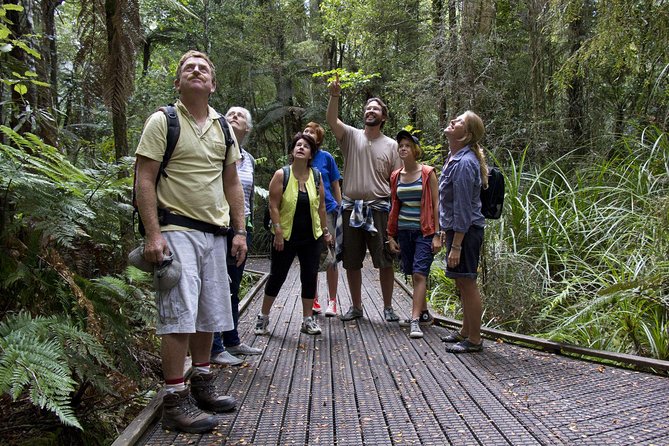
- Ancient kauri trees: See two of New Zealand’s largest kauris and learn why these North Island trees are now protected.
- A real forest hike: Expect boardwalk sections, tree roots, mud, steep uphill and downhill stretches, and roughly 2 to 2.5 miles of walking.
- Small-group guiding: The tour allows up to eight people per guide, with bookings limited to four people.
- Strong local guiding: Ian, Helen, and other local guides explain forest life, Maori stories, conservation, and colonial history.
- Cruise-friendly timing: Pickup begins at 9:30 a.m. from Waitangi Wharf, with transport back to your ship.
- Morning-tea stop: A break is planned halfway through the walk. Check what food is supplied, since food and drinks are not generally listed as included.
Why Puketi Rainforest is worth your shore-day time
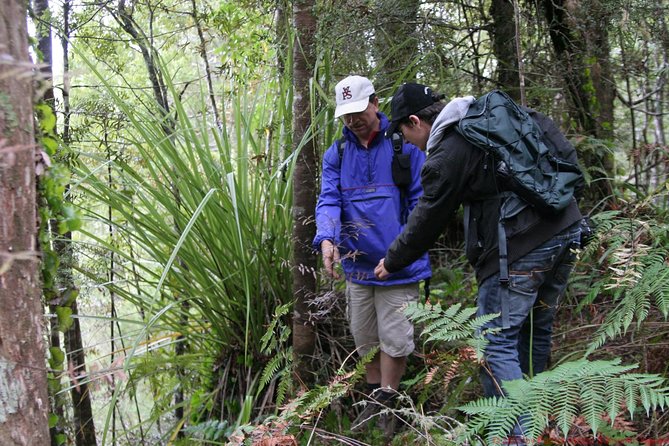
The Bay of Islands is easy to picture as a place of water, islands, and coastal scenery. This excursion gives you a different side of the region. Instead of spending the whole day near the harbor, you head inland to Puketi Rainforest, where giant trees, waterfalls, native birds, and damp forest paths create a much wilder setting.
I like that the forest is not treated as a backdrop for a quick photo stop. The guide explains how the forest works, points out small details you could easily miss, and connects the trees to Maori stories and European settlement. That makes the outing useful for anyone who wants context, not just scenery.
The forest contains about 370 recorded plant species. You may also hear about the kokako, a rare native bird that has been reintroduced in the area. Bird sightings are never guaranteed, and several species can be hard to spot in thick foliage. Still, the possibility of seeing native birds such as the kokako, wood pigeon, or fantail gives the walk another layer of interest.
More Nature Shore Excursions in New Zealand:
- Private Shore Excursion Rotorua/ Tauranga Maori culture, Geyser & concert
★ 5.0 · 20 reviews - Hilo Shore Excursion: Volcanoes National Park & Black Sand Beach
★ 4.5 · 2,338 reviews - Haugesund Shore Excursion: Åkrafjorden & Langfoss waterfall
★ 4.5 · 554 reviews
From Waitangi Wharf to the forest
Pickup is scheduled for 9:30 a.m. at Waitangi Wharf. That is important on a cruise stop, since you do not need to arrange a separate taxi or figure out public transport to reach the trailhead. The operator handles the ride to the forest and brings you back afterward.
The drive also gives your guide a chance to explain the area. Ian and Barbara have been praised for providing useful commentary during the transfer, while Barbara has also driven the return trip on some departures. The personal nature of this transport is part of the appeal. You are not simply deposited at a trail and left to find your way.
The tour lasts about four and a half hours, including transportation and the forest walk. The listed itinerary gives two hours for the main trail portion, though the precise pace depends on the group, weather, and stops. Since cruise schedules matter, the included on-time return policy is reassuring. The operator says it will arrange transport to the next port if the ship leaves unexpectedly, and offers a refund if a ship delay prevents you from taking the excursion. Read the full terms before booking, but this is a useful safeguard for cruise passengers.
Walking beneath Puketi’s giant kauris
Kauri trees grow only on New Zealand’s North Island, and their scale gives this walk its main sense of drama. These trees are linked to ancient forest lineages dating back to the Jurassic period. You will not simply pass a stand of ordinary woodland. The route takes you among some of the country’s oldest and most important native trees.
Two of the largest kauris on the route are specific highlights. Your guide explains the trees’ age, place in Maori tradition, and current protection. You also hear legends connected with these forest giants, along with stories from the area’s colonial past.
The conservation message matters. Kauri trees are now protected, and guides take their responsibilities seriously. A good guide will help you understand why the forest needs care rather than treating the trees as props for photographs. That local concern comes through strongly with Ian and Helen, both of whom are described as deeply committed to the forest.
The route follows marked paths, with some boardwalk. Do not let that wording give you the wrong idea, though. The boardwalk is only part of the experience. The route also includes narrow, muddy paths with exposed roots and serious uphill and downhill sections.
A hike, not an easy boardwalk stroll
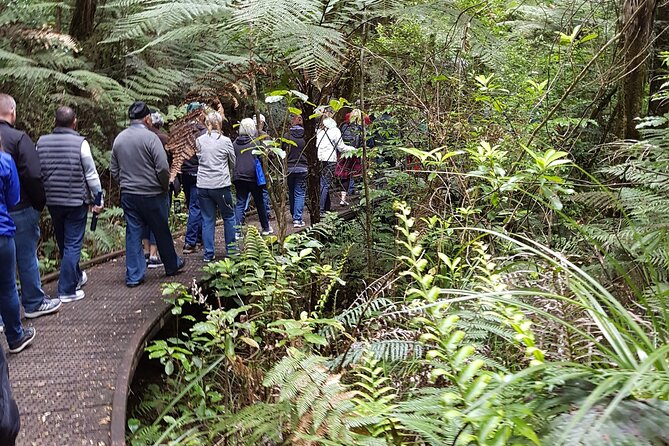
The official description calls the outing moderately strenuous and asks for a moderate level of fitness. In practical terms, I would prepare for a genuine hike. The distance is described as about 2 to 2.5 miles, but the ground and slopes make that more demanding than the number suggests.
Some sections are slippery, especially after wet weather. Mud, tree roots, and steep inclines can be difficult for anyone with weak knees, balance problems, or limited walking ability. One part of the trail may feel like a pleasant forest walk, while another feels much more like a backcountry hike.
Wear sturdy walking shoes with good grip. Bring sunscreen, a hat, and a small day pack. The supplied information does not promise dry or level footing, so leave sandals and smooth-soled casual shoes behind. You should also be comfortable walking for around two hours with breaks rather than assuming you can take the route at a slow, flat-park pace.
Children aged five and older may join, but the fitness requirement still matters. A minimum age does not mean the trail is suitable for every child. The adult booking limit is four people per reservation, while the group size is advertised as up to eight passengers per guide.
More walking tours in New Zealand:
- Lyttelton Shore Excursion – Guided Walking Tour and Picnic
★ 5.0 · 57 reviews - Livorno: Florence Optional Walking Tour and Accademia Entry
★ 4.3 · 671 reviews - Juneau Shore Excursion: Helicopter Tour and Guided Icefield Walk
★ 5.0 · 536 reviews - Sydney Shore Excursion: Sydney Opera House Walking Tour
★ 4.5 · 160 reviews
What your guide adds to the walk
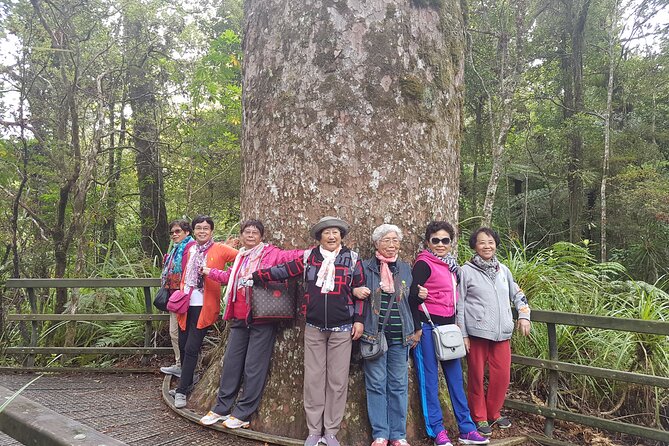
This experience depends heavily on the person leading it. Ian is frequently singled out for his forest knowledge, humor, and ability to make the walk feel personal. Helen brings strong enthusiasm and an obvious affection for the trees and birds. The company uses local guides who care about the area, and that makes a noticeable difference on a nature walk.
A guide can point out details that do not announce themselves. A bird may call from the canopy without showing itself. A plant may look ordinary until someone explains its role in the forest. The walk becomes more rewarding when you understand what you are looking at.
The commentary also reaches beyond botany. Expect Maori legends about the kauri trees, information about European colonial history, and practical discussion of forest protection. That mix gives you a clearer sense of place than a quiet walk without interpretation.
Ian’s volunteer work in the forest is another reason his guiding feels grounded. He is not simply repeating a short script before sending you down a path. The local connection helps explain why the guides pay close attention to conservation and why they speak with such pride about Puketi.
Waterfalls, birds, and the halfway break
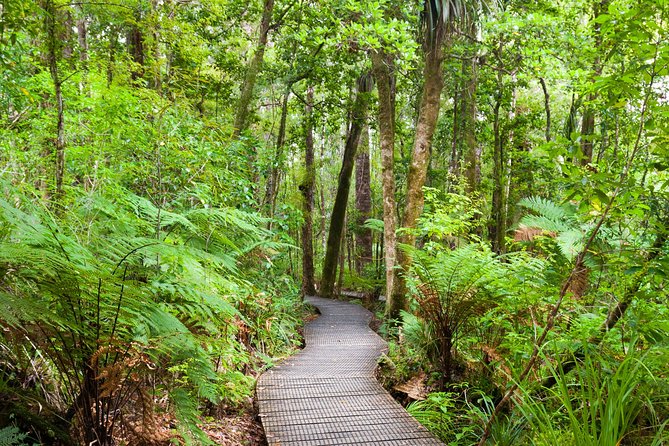
Waterfalls add movement to a forest that might otherwise seem still. Along the route, you pass cascading and thundering water, depending on recent conditions. The sound gives the walk a welcome change from the quiet among the kauris and makes a natural point for photographs.
Your guide will also watch for native birds. The kokako is rare and difficult to spot, so do not book this as a guaranteed birding trip. You may instead notice a wood pigeon or fantail, and even a brief sighting can be satisfying in thick forest.
A morning-tea stop is planned around the halfway point. It gives you time to rest, take in the forest, and catch your breath before the return section. Bottled water and homemade muffins have been provided on some departures, but the formal inclusions say food and drinks are not included unless specified. I would bring water and confirm the morning-tea details at booking, especially if you have dietary needs.
Specific dietary requirements should be provided when you book. That is particularly important if you select an option described as a full-day tour, since the information notes different arrangements for that option.
How the small group affects the experience
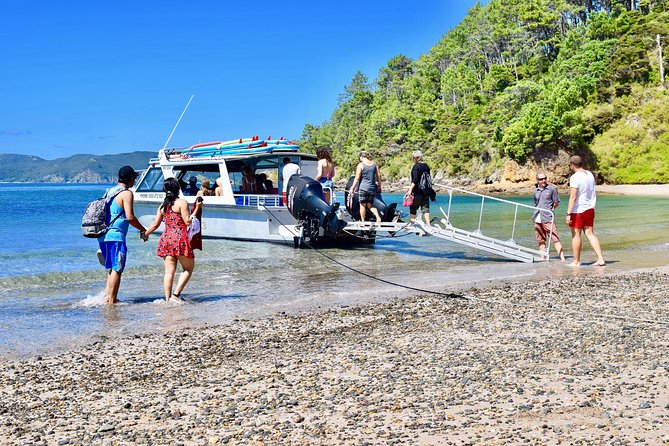
A maximum of eight passengers per guide is a good size for a forest walk. You can hear the explanation without standing in a large crowd, and the guide has a better chance to adjust the pace or answer questions. A smaller party also makes it easier to pause when someone spots a bird or wants to look closely at a plant.
Some departures may be much smaller. Groups of four have been common enough to shape the experience, and that can feel almost like a private tour without the price of hiring a guide alone. The operator limits each booking to four people, so larger parties may need to arrange separate bookings.
A small group does not remove every difficulty. If one person is much slower on steep ground, the pace can change for everyone. Still, the group limit is a real advantage over a large coach outing where the guide has little time for individual questions.
Is the $157.01 price good value?
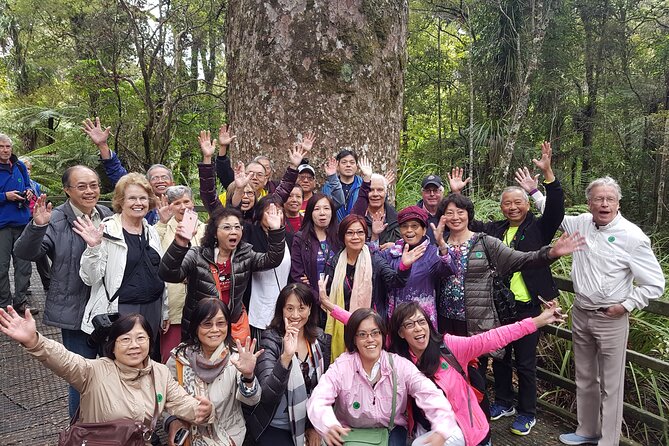
At $157.01 per person, this is not the cheapest way to spend a few hours in the Bay of Islands. You are paying for transport from the wharf, a local guide, a small group, and a cruise-friendly return arrangement rather than only access to a trail.
I think the price makes sense if you value interpretation and convenience. A self-guided forest visit might cost less, but you would miss the stories, plant identification, conservation details, and help with the route. You would also need to arrange your own transport and manage the timing around your ship.
The value is weaker if you mainly want a casual nature stroll. In that case, the steep and muddy sections may feel like more effort than you expected. The tour earns its price for people who want a guided forest hike with a local human connection, not for those seeking a quick scenic stop.
The activity is popular enough to be booked around 99 days ahead on average. I would reserve early if this is the shore excursion you want, especially since the small group can fill before your cruise date.
Who should book this experience?
I would choose this tour if you enjoy walking, native forests, and guides who explain what you are seeing. It is a good fit for fit hikers, keen gardeners, birdwatchers who accept that sightings are uncertain, and anyone who wants to understand New Zealand’s North Island beyond its coastline.
It also suits cruise passengers who want a handled start and finish. Pickup, drop-off, and the operator’s ship-return policy simplify the day. That convenience matters when your ship is in port for only a limited time.
I would think twice if you have trouble with steep slopes, slippery surfaces, or uneven ground. The route is not a gentle, fully accessible boardwalk. If you are unsure, ask the operator to describe current trail conditions and the exact walk option before paying.
Free cancellation is available up to 24 hours before the start time. Changes or cancellations inside that window are not accepted for a refund, and the experience requires a minimum number of participants. Those terms are worth noting when coordinating a cruise itinerary.
Should you book the Puketi Rainforest walk?
Book it if your idea of a good shore day includes a real forest hike, ancient kauris, local stories, and a guide who cares about conservation. The combination of Ian or Helen’s personal guiding style, a small group, waterfalls, and port transport gives you a thoughtful half-day in the Bay of Islands.
Skip it if you want a flat, easy walk or have limited confidence on mud, roots, and steep ground. The most important decision is not the scenery or the price. It is being honest about your fitness. If you can handle a moderately strenuous hike and bring proper shoes, Puketi Rainforest offers one of the area’s strongest nature-focused outings.
FAQ
Where does the Puketi Rainforest tour start?
The tour starts with pickup from Waitangi Wharf, where cruise passengers meet at 9:30 a.m.
How long does the experience last?
The full shore excursion lasts about four hours and 30 minutes. The main forest trail portion is listed as about two hours.
How strenuous is the walk?
The walk requires a moderate level of fitness. It includes boardwalk sections, steep uphill and downhill areas, narrow paths, mud, and tree roots. Some participants describe it as a hike rather than a simple walk.
How large is the group?
The experience is limited to eight passengers per guide. Each booking can include a maximum of four people.
What should I bring?
Bring good walking shoes, sunscreen, a hat, and a day pack. Sturdy footwear is especially important because parts of the path may be muddy and slippery.
Can children join the tour?
The minimum age is five years. Children still need to manage a moderately strenuous trail with uneven and steep sections.
Is food included?
A morning-tea stop is planned during the walk, but food and drinks are not generally included unless specifically stated. Dietary requirements should be provided when booking.
Is transportation included?
Yes. Port pickup and drop-off are included, with transport from Waitangi Wharf to Puketi Rainforest and back to the ship.
What happens if my cruise ship is delayed?
If a ship delay prevents you from taking the activity, the operator says you will receive a refund. The shore excursion also includes a stated on-time return policy, with arrangements for transportation to the next port if the ship departs unexpectedly.
Newly added around New Zealand
- Quickie Tours 1 Hour City Sights Tour Cruise Ship days Only★ 4.5 · 6 reviews
- Catlins Cruiser Private Tour from Dunedin Cruise Port★ 3.5 · 2 reviews
- Otago Peninsula & Larnach Castle Shore Excursion★ 4.5 · 38 reviews
- Private Castle Hill & Inland Canterbury Shore Excursion★ 5.0 · 2 reviews
- Lyttelton Shore Excursion: Twin Harbour Tour (Lyttelton & Akaroa)★ 3.5 · 4 reviews
- Inland Canterbury & Castle Hill Tour (Lyttelton Shore Excursion)★ 5.0 · 5 reviews
- Lyttelton Shore Excursion – Waipara Wine Tour With Lunch★ 4.5 · 19 reviews
- Akaroa & Banks Peninsula from Lyttelton(Private Shore Excursion)★ 5.0 · 6 reviews
New Zealand Shore Excursions, compared.
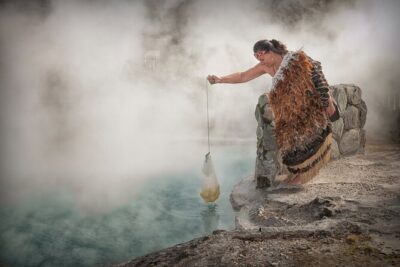
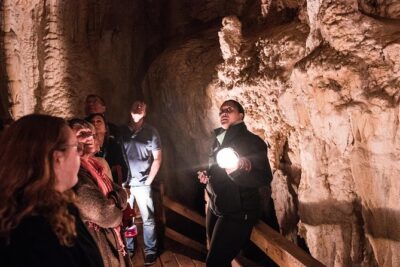
Bay of Islands Glow Worm Caves & Scenic Shore Excursion
Read our review →
6.5 hour Small-Group Rotorua Naturally Shore Excursion – Tauranga
Read our review →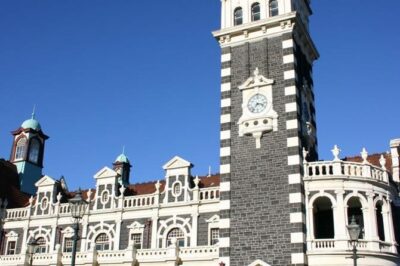
Dunedin Shore Excursion: Small-Group Tour of Dunedin and the Otago Peninsula
Read our review →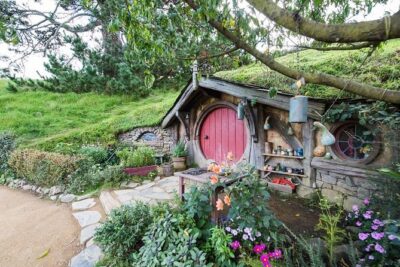
Hobbiton Movie Set Shore Excursion from Tauranga (6 Hours)
Read our review →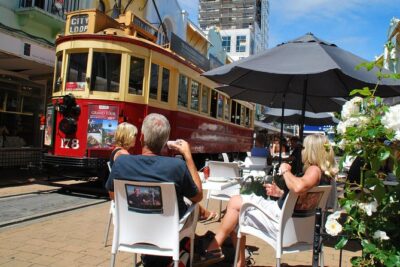
Akaroa Shore Excursion: Banks Peninsula and Christchurch City Sights Tour
Read our review →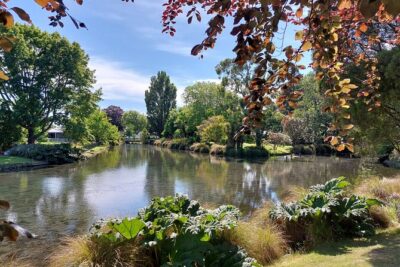
Lyttelton Shore Excursion: Christchurch City Sights
Read our review →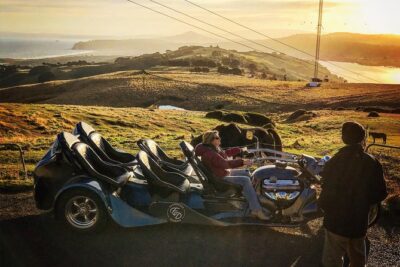
Shore Excursion: V8 Trike, Peninsula and City Tour
Read our review →Browse the lists this tour appears in