REVIEW · SHORE EXCURSIONS
Shore Excursion: North and South Sides of Bonaire
Bonaire’s best feature is its small-island variety. In about three hours, this tour takes you from coral cliffs and turtle-filled water to flamingo country, cactus scrub, old villages, salt ponds, and the stark little huts where enslaved salt workers once lived. It is a fast but useful first look at an island that rewards getting beyond Kralendijk.
I like the way the tour covers both ends of Bonaire, and I like the local guides. Guides such as Peter, Vanessa, Martijn, Eugene, and Chela have been praised for explaining the island’s past and present in a friendly, personal way. The $45 price is also fair for a port pickup, bottled water, and a ride around the island.
The main caution is the vehicle. Groups may be placed in a small van, sometimes with up to 12 people, and several passengers have found the back seats cramped or hot. The schedule is tight, too, so this is sightseeing from the road with short stops, not a relaxed beach day.
Key points to know before booking
- Three hours from north to south: You see far more than the capital, including Goto Lake, Rincon, the salt flats, and Sorobon.
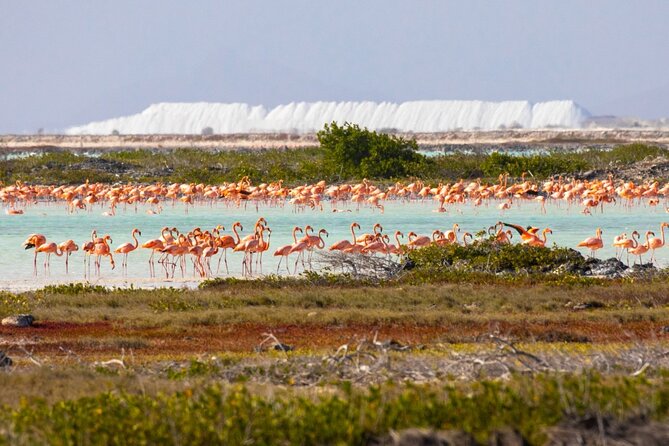
- Flamingos are wild: You may see them close to the road, but they can also be far away or absent from a particular stop.
- The distillery and museum are alternatives: The group may visit Cadushy Distillery or Museo Chich’i Tan, not necessarily both.
- The vehicle matters: Air-conditioning is offered, but past groups have reported cramped seating and occasional cooling problems.
- A local guide adds real value: Guides including Peter, Vanessa, Martijn, Eugene, and Chela have been praised for island history and easy conversation.
- The schedule protects your ship time: Stops are brief, and the tour returns to the cruise port after roughly three hours.
Why this tour works for a short Bonaire port day
Bonaire is easy to underestimate. The capital, Kralendijk, is pleasant and compact, but the island’s character appears outside town. You need to travel north for the cliffs, cactus country, Goto Lake, and Rincon. You need to travel south for the salt industry, pink ponds, slave huts, and lighthouse views.
This outing links those pieces in one continuous loop. That makes it a good choice if you are visiting Bonaire by cruise ship and want an introduction rather than a single activity. You will not have long at each stop, but you will see how the island fits together.
The tour begins with pickup near the cruise port. You meet the driver-guide, climb into the vehicle, and pass through Kralendijk toward the north. Depending on the season and vehicle assigned, the ride may be in an air-conditioned van or an open-air vehicle. Bottled water is included, but food and other drinks are not.
The strongest part of the outing is the guide’s local explanation. A good driver turns the ride between stops into part of the tour, pointing out places you could easily miss and explaining how salt, plantations, fishing, tourism, and island traditions shaped Bonaire. Peter and Vanessa have received especially warm praise for this style, while Martijn and Chela have also been noted for informative, personable guiding.
More shore excursions in the world:
- FOR CRUISERS: Skip The Lines PRIVATE EPHESUS TOUR &On Time Return
★ 5.0 · 8,527 reviews - Top Choice For Cruisers: Ephesus, Mary’s House WITH TICKETS+LUNCH
★ 5.0 · 7,233 reviews - PRIVATE EPHESUS TOUR FOR CRUISERS: On-time Return and Skip-Line
★ 5.0 · 5,807 reviews
1,000 Steps gives you coral cliffs and clear water
The first major stop is 1,000 Steps, a famous coastal viewpoint and beach. The name is playful rather than literal, but the staircase is still steep enough to matter. The cove has white sand, bleached coral, limestone cliffs, and clear turquoise water.
This is a short stop on the practical schedule, listed at about five minutes. You may have time to admire the view and look toward the water, but you should not count on a long swim or snorkel session. Some people have expected much more time here, so adjust your expectations before you arrive.
The water is known for sea turtles, and one past group was lucky enough to see a turtle from this area. Still, wildlife is never guaranteed. The real value of the stop is the view of Bonaire’s coral coast and the chance to see one of the island’s best-known natural sites without spending half your port day there.
The staircase may be difficult if you have limited mobility. The tour is not described as wheelchair accessible, and you will be climbing in and out of a van several times. If you want to stay with the group, ask the operator about the vehicle and walking requirements before booking.
Goto Lake is the flamingo stop
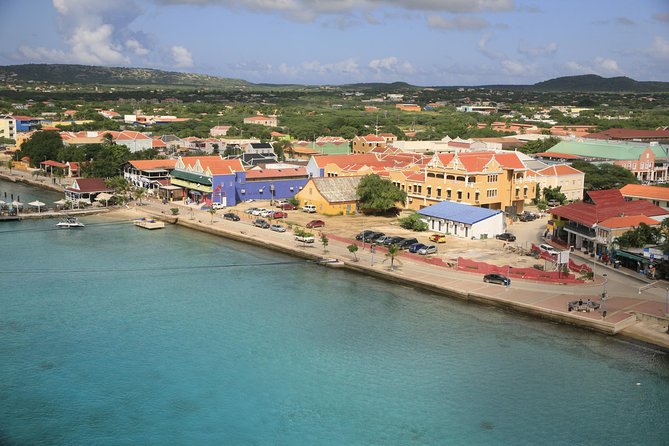
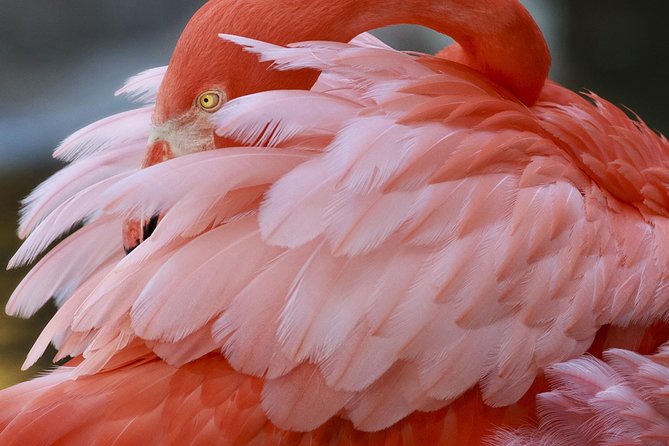
The road continues through cactus country to Goto Lake, a saltwater lagoon near the northern part of the island. This is one of the most memorable stops because Bonaire is one of the few places where pink flamingos nest.
The word nest matters here. These are wild birds, not a staged attraction. You might see a few flamingos near the road, or you might find a large group farther out on the salt flats. Guides watch for them and may make extra roadside stops when birds are in a good position, but the vehicle cannot control where the flamingos choose to gather.
Bring patience and stay quiet when the guide asks. Sudden noise can send the birds away. A phone camera may capture them, but a zoom lens or binoculars would help if you have one. Some people see flamingos close to the road, while others find most of them far off. That difference is simply part of seeing wildlife in the open.
The stop also gives you views toward Washington Slagbaai National Park. The tour does not provide a full visit to the park, but the view helps show how much of Bonaire remains dry, rugged, and lightly developed.
Rincon shows Bonaire’s older side
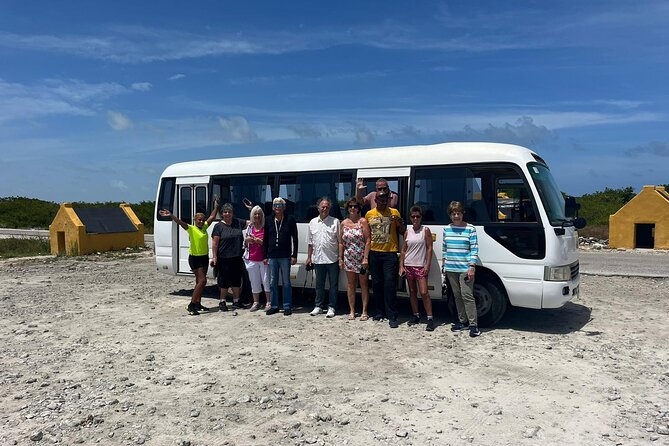
Rincon is described as Bonaire’s oldest village and was first established by the Spanish in the early 1500s. Its position away from the coast helped make it a safe place for settlement, and it remains an important part of the island’s story.
The stop is less about a single spectacular sight and more about context. As you drive through or pause in the village, the guide can connect Rincon with plantation life, local customs, and the long period when Bonaire’s economy depended on salt and agriculture.
This is where a local guide makes a real difference. The island’s story is not confined to a museum label. It comes through in place names, old houses, working traditions, and the contrast between the quiet village and the busy cruise pier. If you only walk around Kralendijk, Rincon gives you a much broader sense of Bonaire.
Same port call, a different plan:
- From the Port of Kos: Full Day Boat Cruise to 3 Islands
★ 4.8 · 5,137 reviews - Hilo Shore Excursion: Volcanoes National Park & Black Sand Beach
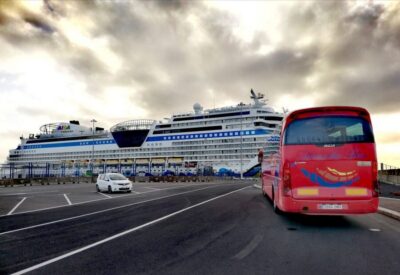
★ 4.5 · 2,338 reviews - Arrecife: Timanfaya and Green Lagoon for Cruise Passengers
★ 4.6 · 2,010 reviews - For cruise passengers: Guided ATV Tour of Dutch & French St. Maarten
★ 5.0 · 1,552 reviews
Cadushy Distillery or Museo Chich’i Tan
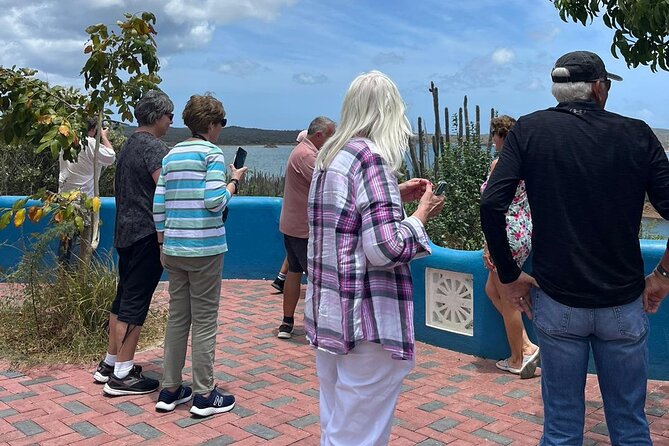
The planned cultural stop can vary. The group may visit Cadushy Distillery, where cactus liqueur is made, or Museo Chich’i Tan, an old house turned into a small museum. The tour description says these options are chosen in consultation with the group, so do not assume both will be included.
At Cadushy, you may see how the island’s cactus liqueur is produced and sample it. The listed visit is about 15 minutes. That is enough for a quick introduction and tasting, not an extended distillery tour.
Museo Chich’i Tan offers a different look at Bonaire. The roughly 200-year-old house contains old musical instruments, tools, pottery, and household objects connected with life in the 1800s. It is a useful stop if you want local culture rather than another photo point.
This is one area where you should ask your guide what is planned that day. Some groups have not stopped at the distillery, while others have received samples at a museum stop. The operator’s own description allows either Cadushy or the museum, so the final choice may depend on timing, group preference, and access.
Salt flats explain Bonaire’s economy
The southern part of the island changes the tone of the tour. You leave the cactus hills and arrive among salt ponds, white crystal piles, and broad stretches of open ground. The salt flats were once the center of Bonaire’s salt industry, and salt is still processed and exported from the island.
The colors can be striking. Depending on the pond and the light, you may see pink water, bright white salt, and blue sky in the same view. The pink color comes from the salt environment and the small organisms that live in it. You do not need a long stop to understand why this is one of Bonaire’s signature scenes.
The salt pyramids are especially easy to recognize. They are large white piles formed from harvested salt, lined up near the southern road. This is an active working area, not simply an old ruin, so follow the guide’s instructions and remain in permitted viewing spots.
Slave huts add a sobering chapter
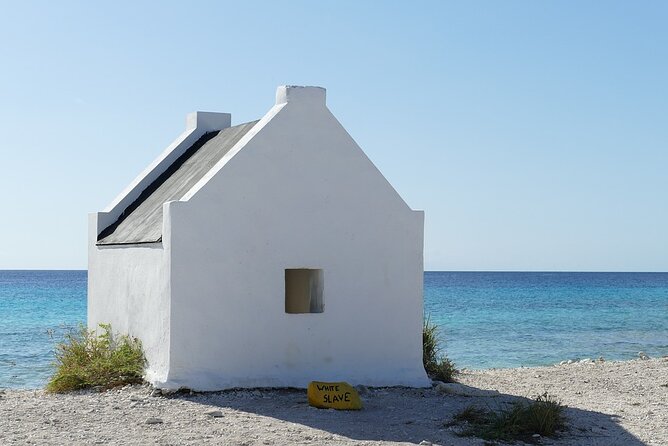
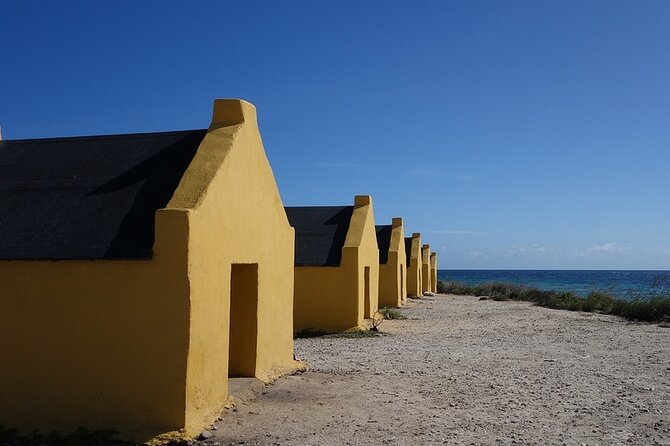
Near White Pan, the small slave huts offer one of the most important stops. Enslaved people brought from Africa worked in the salt pans and plantations. The huts were used as basic quarters for salt workers in the 1850s, before slavery was abolished in the Dutch Antilles in 1863.
The structures are tiny and stark. That is precisely why the stop matters. The salt piles can look bright and almost cheerful, but these huts show the human cost behind the industry. The guide’s explanation helps connect the landscape to the people forced to work here.
The stop is short, listed at about five minutes. You will not receive a long museum presentation, but even a brief pause changes how you see the salt flats. I would give this stop your full attention rather than treating it as another quick photograph.
The route also passes Willemstoren, Bonaire’s first lighthouse. It is not open to the public, so this is an exterior sight from the road rather than a climb or formal visit.
Sorobon Beach is a quick final look
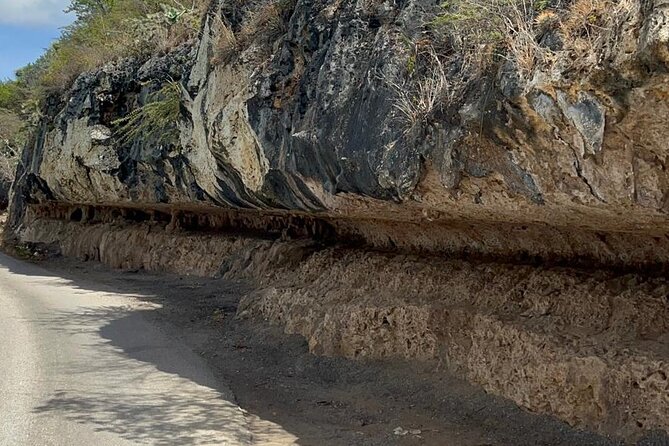
Sorobon Beach is listed as a final five-minute stop. The guide may pause so you can see the area, and if you want to remain there, you may be told how to return to the port independently.
That wording is important. This is not a guaranteed beach stay built into the three-hour loop. If Sorobon is the main reason you want to visit Bonaire, a dedicated beach transfer would suit you better. The island tour is designed to show you many places, not to give you a long stretch of sand and water.
The guide must also keep an eye on the ship schedule. If earlier stops run long, the final stop may be shortened or skipped. That can be frustrating if you had your heart set on Sorobon, but returning to the ship on time is the correct priority for a port excursion.
The van can shape your whole day
The vehicle is the biggest practical question. Some groups have ridden in a comfortable air-conditioned van with seven people. Others have described a crowded Toyota Hiace or similar vehicle, with limited legroom in the back and difficult access for larger adults.
The stated maximum is 60 people, but that does not mean you will ride in one large bus. In practice, the operator may divide the group among smaller vans, with reports of groups ranging from six to 12 people. A smaller vehicle can feel personal and allows quick roadside stops, but it can also become uncomfortable in Bonaire’s heat.
Air-conditioning problems have occurred. One group rode in a van that began without working air-conditioning, while another found the front seats cool but the rear seats hot. Mechanical trouble can happen, but it is worth asking about the day’s vehicle if heat or confined seating is a serious concern.
The tour may also operate with a multilingual guide. Children must be accompanied by an adult, and most people can participate, but the repeated climbing into the van and the steep approach at 1,000 Steps may be hard for anyone with mobility limits.
Is $45 a fair price?
At $45 per person, the tour offers good value if you want island coverage. You get port pickup and return, a driver-guide, bottled water, and roughly three hours of transport and sightseeing. A private taxi covering both ends of Bonaire would likely cost more, though this tour gives you less control over timing.
The value comes from the number of sights, not from long visits. In one outing, you can see flamingos, coral cliffs, a historic village, salt ponds, salt pyramids, slave huts, and a beach. You also avoid the work of arranging separate rides.
The tradeoff is comfort and flexibility. You cannot linger at 1,000 Steps, wait indefinitely for flamingos, or guarantee the distillery. If you book directly at the port, the price may sometimes be lower than the online rate, but advance booking helps secure a place. The online price also includes the convenience of arranging the excursion before your ship arrives.
Free cancellation is available up to 24 hours before the start time. Changes or cancellations inside that window are not accepted for a refund. A minimum of four people is required for the tour to operate.
Who should book this Bonaire tour?
I would choose this tour if you are visiting Bonaire for the first time and want a quick orientation. It is also a good fit if you enjoy local history, wildlife sightings, and varied scenery more than a long beach break.
It suits cruise passengers who want the reassurance of port pickup and return. The guides have been praised for explaining the island clearly, answering questions, and adjusting briefly for photo stops. Chela has also provided the tour in Spanish, which may help Spanish-speaking groups.
I would hesitate if you need generous legroom, guaranteed air-conditioning, or long stops. I would also choose another option if your main goals are snorkeling, swimming, or spending the day at Sorobon. This is a road tour with frequent short visits, not a water excursion.
Should you book North and South Sides of Bonaire?
Book it if you want the biggest possible overview for $45 and can accept a compact schedule. The combination of flamingos, salt flats, slave huts, Rincon, 1,000 Steps, and local guiding gives you a real introduction to Bonaire, even though no single stop gets much time.
Before paying, confirm the meeting point, vehicle type, and whether the day’s cultural stop will be Cadushy Distillery or Museo Chich’i Tan. If you are sensitive to heat or cramped seating, ask directly about the van. With those points clear, this is a practical, reasonably priced way to see both sides of Bonaire during a short port call.
FAQ
How long is the North and South Sides of Bonaire tour?
The tour lasts approximately three hours, including the drive around the island and the scheduled stops.
Where does the tour pick up cruise passengers?
Cruise passengers are picked up at the cruise port after leaving the ship. Booking requires the ship name, docking time, disembarkation time, and re-boarding time.
Does the tour return to the cruise port?
Yes. The tour ends with drop-off at the cruise port.
Is the tour available to people who are not on a cruise?
Yes. The experience is available to non-cruise passengers, and the time can be adjusted.
Will the tour vehicle have air-conditioning?
The vehicle may be air-conditioned or open-air depending on the season. Air-conditioning has also occasionally had mechanical problems, so ask about the vehicle if this is important to you.
Are flamingos guaranteed?
No. The tour visits flamingo areas, but the birds may be close to the road, far away, or in another part of the salt flats. Guides may make extra stops when flamingos are spotted.
Will I see sea turtles at 1,000 Steps?
Sea turtles are often found in the shallow water at 1,000 Steps, but wildlife sightings are not guaranteed. The stop is brief, listed at about five minutes.
Do I visit both Cadushy Distillery and Museo Chich’i Tan?
Not necessarily. The tour may visit either Cadushy Distillery or Museo Chich’i Tan, depending on the group and the day’s arrangements.
Is food included?
No. Bottled water and the driver-guide are included, but food and other drinks are not.
What is the cancellation policy?
You can cancel at least 24 hours before the start time for a full refund. Cancellations or changes made less than 24 hours before the tour are not refundable.
Newly added around the world
- Shore excursion from Livorno to Siena and San Gimignano by private minivan★ 4.5 · 7 reviews
- Shore excursion from Livorno to Pisa and Lucca★ 5.0 · 5 reviews
- Wine Tour Bolgheri Half Day Shore Excursion from Livorno Port★ 5.0 · 3 reviews
- Wine Tour Bolgheri Half day Shore Excursion from Piombino Port★ 5.0 · 2 reviews
- Private tour to Florence and Pisa from Livorno port★ 4.5 · 6 reviews
- Private San Gimignano Wine Tour from Livorno Port★ 5.0 · 3 reviews
- Florence and Pisa: Round Trip Tour from Livorno Cruise Port★ 5.0 · 4 reviews
- Private tour from Livorno port to San Gimignano & Volterra★ 5.0 · 2 reviews
Shore Excursions, compared.
FOR CRUISERS: Skip The Lines PRIVATE EPHESUS TOUR &On Time Return
Read our review →
Top Choice For Cruisers: Ephesus, Mary’s House WITH TICKETS+LUNCH
Read our review →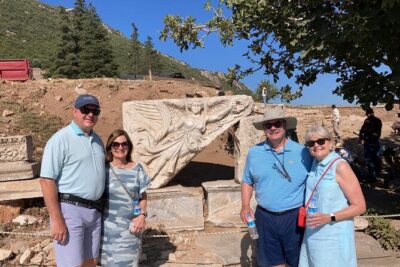
PRIVATE EPHESUS TOUR FOR CRUISERS: On-time Return and Skip-Line
Read our review →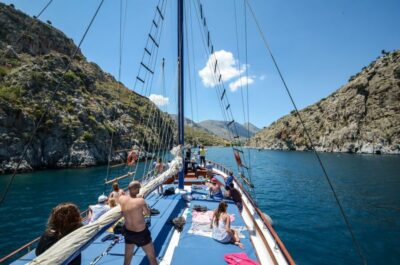
Timanfaya and Green Lagoon for Cruise Passengers
Read our review →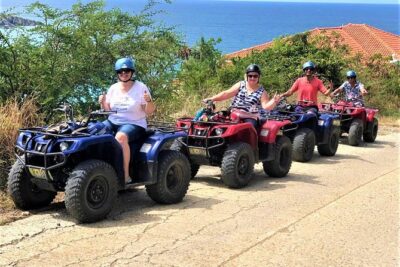
For cruise passengers: Guided ATV Tour of Dutch & French St. Maarten
Read our review →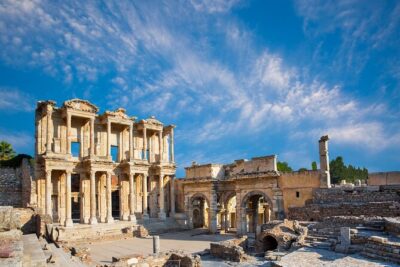
PRIVATE TOUR FOR CRUISERS: Mary’s House (Meryemana) and Ephesus
Read our review →