REVIEW · ATHENS SHORE EXCURSIONS
The Highlights of Athens Private Shore Excursion 8 Hours
The big appeal here is simple: you can see much of Athens in one long day without wrestling with taxis, metro connections, or cruise-port traffic. The private car takes you from Piraeus to the Acropolis, then links ancient ruins, grand neoclassical buildings, Plaka, and Mount Lycabettus in one ambitious circuit.
I especially like the one-group-only format, which lets you adjust the pace and skip a stop that does not interest you. I also like the local lunch potential. Drivers have taken families to simple Greek restaurants with fresh fish, homemade dishes, and baklava rather than steering everyone toward a standard tourist stop. The drawback is that entrance fees are extra, and the driver cannot accompany you inside the archaeological sites as a licensed guide.
Key points to know before booking
- Acropolis first: See the Parthenon, Propylaea, Temple of Athena Nike, and Erechtheion before moving through central Athens.
- Private transport from Piraeus: Pickup and return are arranged at Terminal A, making this useful for a one-day cruise stop.
- Flexible sightseeing: Drivers can adjust the order and time spent at stops, traffic permitting.
- Plaka lunch break: You get about 90 minutes for food and wandering in Athens’ old neighborhood.
- Big city views: Lycabettus Hill gives you a wide look over Athens and the coast.
- Extra costs matter: Archaeological-site and museum tickets, food, drinks, and a licensed guide are not included.
An ambitious Athens day from Piraeus
This is designed for the person who has one useful day in Athens and wants the broad picture. You begin at Piraeus, Greece’s main port, then drive along the Saronic Gulf coast toward the city. The port is only about 12 kilometers from central Athens, but traffic can turn that short distance into a slow start, especially on busy cruise days.
The eight-hour format gives you a private vehicle, an English-speaking driver, and door-to-door transport. The vehicle is air-conditioned and matched to your group size. For a cruise stop, that matters. You do not have to find a taxi after disembarking, and you return to the same pickup point with the driver keeping an eye on the clock.
The schedule is full. It includes major archaeological sites, city squares, neoclassical buildings, a neighborhood walk, a museum, and two high viewpoints. Think of it as a well-planned overview rather than a relaxed, in-depth visit to every location.
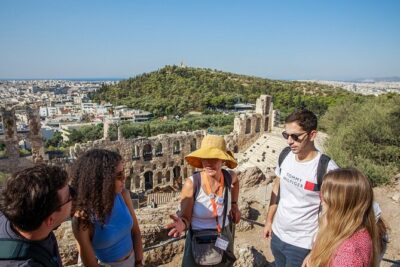
Your driver explains the history and culture as you travel and guides you to the entrance of sites. Drivers are not licensed to lead you inside the archaeological areas or museums. You can arrange a licensed guide for an added fee, but availability is not guaranteed on the day.
More City Highlights Shore Excursions in Athens
- Athens Shore Excursion: Athens and Piraeus Hop-On Hop-Off Bus Tour
★ 4.0 · 617 reviews - From Cruise Port: The Acropolis & Athens Highlights Tour
★ 4.6 · 105 reviews - Embark | Disembark The Highlights Of Athens – 4 H Private Shore Excursion
★ 5.0 · 35 reviews
The Acropolis: start with Athens at its greatest height
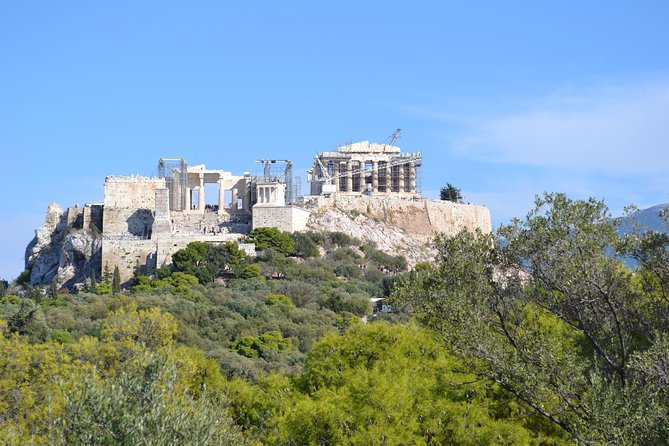
The Acropolis is the heart of the day. You climb the rocky citadel above Athens and encounter the monuments built during the city’s fifth-century BC golden age, when democracy, art, architecture, and political power came together.
The route begins at the Propylaea, the monumental gateway designed by Mnesicles. It was built between 437 and 432 BC as part of Pericles’ building program, though the original plan was never finished. Its Pentelic marble and broad entrance make it a fitting doorway to the sacred hill.
Nearby, the small Temple of Athena Nike sits on a bastion above the approach. The temple honored Athena as wingless victory, a clever symbol of a victory that would never leave Athens. You get about 15 minutes here, enough for an explanation and photographs, but not a long study of the architecture.
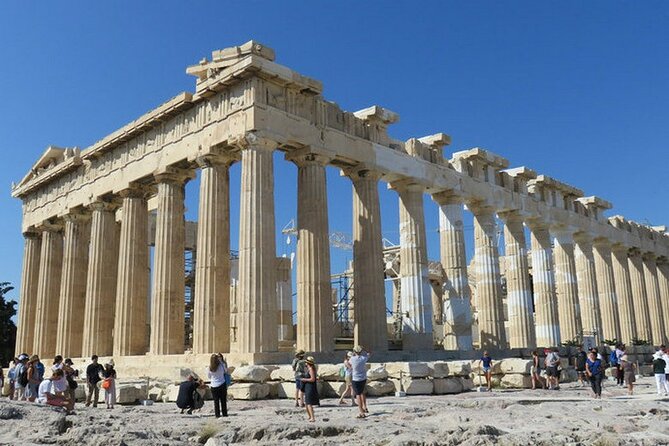
Then comes the Parthenon, the sight that brings most people up the hill. Built between 447 and 438 BC for Athena Parthenos, it was designed by Ictinus and Kallikrates, with Pheidias overseeing the sculpture and larger building program. Look closely at its apparently straight lines and you will find subtle curves and refinements designed to make the temple appear balanced from below.
The Erechtheion provides a different kind of beauty. Its unusual plan reflects several old cults and myths, including the contest between Athena and Poseidon for control of Athens. The famous Caryatid porch is especially memorable. The figures on the building are casts, while five originals are housed in the Acropolis Museum and one is in the British Museum.
Allow time for stairs, uneven ground, and smooth marble. One family found that strollers were not practical at the Temple of Athena Nike, where steps and slippery surfaces made carrying children safer. You should wear shoes with firm traction and bring water, especially in hot weather.
Entrance to the Acropolis is not included. Pre-purchasing tickets is wise, since availability may be limited. The operator can buy them in advance for a small service fee.
Syntagma Square and the slow-footed Evzones
After the Acropolis, the route moves through the modern civic center of Athens. At Syntagma Square, you see the Hellenic Parliament, once the royal palace of King Otto and King George I. The building became the home of Parliament and the Senate about a century after it was built and still serves that role.
Across the square, the Tomb of the Unknown Soldier honors Greek soldiers who died in war. The Evzones, members of Greece’s last traditional light infantry unit, guard it around the clock. Their distinctive uniform includes the fustanella, a pleated kilt said to contain 400 pleats representing the years of Ottoman rule.
The hourly guard change is short, while the larger ceremony takes place on Sunday at 11 a.m. The slow, precise movements and pom-pom-topped shoes are entertaining to watch, but the uniforms also carry serious military and national meaning. Your driver may adjust the order of the day to catch the ceremony at a useful time.
The Old Royal Palace, Parliament, the Tomb, and Syntagma Square can be seen without admission charges. The square is also a useful place to understand modern Athens, since major political events have unfolded here since the formation of the modern Greek state.
The Neoclassical Trilogy and Athens’ green center
The next portion is mostly an outside look at Athens’ elegant public buildings. The Academy of Athens, the National and Kapodistrian University, and the National Library form the city’s famous Neoclassical Trilogy.
Each stop is brief, about five minutes. That means you will mainly pause for photographs and a short explanation rather than enter the buildings. The university was founded in 1837 and was the first university in the modern Greek state and the wider Balkan and eastern Mediterranean area.
The National Library holds more than one million books and magazines, along with handwritten works dating from the ninth to the nineteenth centuries. The current neoclassical building was constructed between 1887 and 1902.
The National Garden offers a change of pace behind Parliament and Syntagma Square. Designed in 1839 for Queen Amalia, the former royal gardens cover more than 160,000 square meters and include hundreds of plant and tree varieties. It is a useful breathing space in a day otherwise filled with stone, traffic, and crowds.
More City Highlights Shore Excursions in Greece
- Shore Excursion: Acropolis, Athens City tour and The New Acropolis Museum
★ 4.5 · 30 reviews - Piraeus Shore Excursion: ALL INCLUSIVE Skip-the-Lines Athens sightseeing Tour
★ 4.5 · 27 reviews - Athens City Tour with Acropolis & Plaka from Piraeus Cruise Port
★ 4.5 · 26 reviews - Athens Highlights Shore Excursion Full Day Private Tour
★ 5.0 · 26 reviews
Plaka: your best chance to slow down
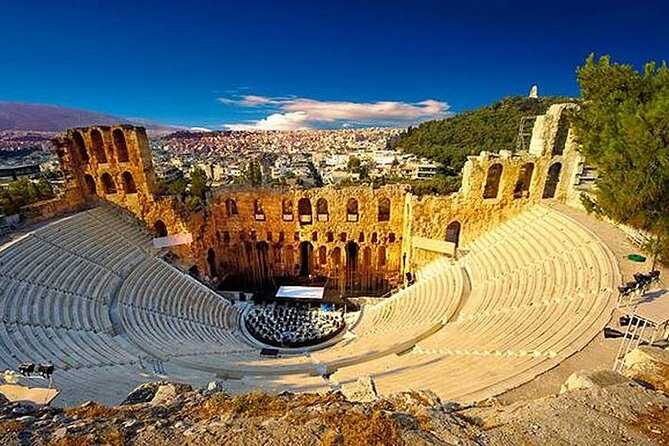
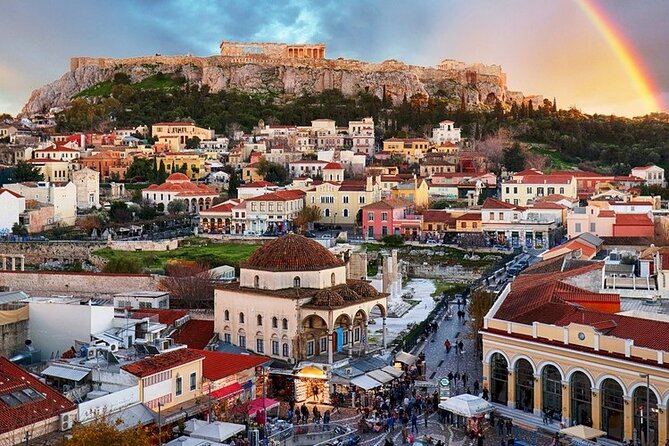
Plaka is where the tour feels least like a checklist. Below the Acropolis, its narrow streets, neoclassical buildings, small shops, cafés, and family-run tavernas create a village-like corner in the middle of Athens.
You have about 90 minutes for lunch and free time. This is the point where I would ask the driver for a local taverna rather than choosing the first restaurant beside the busiest street. Several drivers have recommended family-run places serving fresh fish, Greek salad, meatballs, bread, and other home-style dishes. One particularly thoughtful driver even stopped at a bakery so a guest could take authentic baklava back to the ship.
Plaka also includes Anafiotika, a tiny whitewashed quarter tucked against the Acropolis slope with the feel of a Greek island village. The lanes can be steep and irregular, so you will want comfortable shoes and a little patience.
This is also the easiest stop to adjust. If you want a longer meal, fewer museums, or a quick pastry stop, tell the driver. The private format gives you more control than a fixed coach tour, though traffic and opening times still limit what can be changed.
Ancient Agora and the Acropolis Museum
The Ancient Agora lies northwest of the Acropolis. For about 5,000 years, this area served at different times as a meeting place, market, residential quarter, and civic center. The surviving remains show layers from the Archaic, Greco-Roman, Byzantine, and later periods.
You get roughly 40 minutes here. That is enough to see the setting and hear why the Agora mattered, but it is not enough for a slow archaeological study. Admission is extra, and the driver stops at the entrance rather than guiding you through the ruins.
The Acropolis Museum deserves more time, with about 90 minutes planned. Opened in 2009, it was built about 300 meters from the Acropolis to house objects found on the sacred rock and its slopes. The displays range from the Greek Bronze Age to Roman and Byzantine Greece.
The museum helps you make sense of details that can be hard to see on the hill itself. It also provides a cooler, more orderly setting after a climb. If you have a strong interest in ancient art, ask about spending more time here and trimming one of the shorter city stops.
The museum ticket is separate. So are all archaeological-site admissions. That can make the final cost higher than the headline tour price, but it also lets you decide which sites you actually want to enter.
Olympian Zeus, the marble stadium, and Lycabettus Hill
The former sanctuary of Olympian Zeus offers another large-scale ancient sight in southern Athens. The temple was dedicated to Zeus and became one of the great marble buildings of the ancient world. The tour includes the area in the driving route, with time depending on traffic and your chosen stops.
At Kallimarmaro, or the Panathenaic Stadium, you pause for about 15 minutes. The stadium is made of Pentelic marble, the same stone used for several famous Athenian monuments, and hosted the first modern Olympic Games in 1896. Its marble changes tone with the light, shifting from a cooler appearance earlier in the day to a warmer bone-gold color later on.
The final major stop is Mount Lycabettus, the highest point in central Athens at 277 meters. You spend about 70 minutes here, with views across the city and toward the coast. The hill can be reached by foot, funicular, or car, and this tour uses the vehicle to make the stop practical within a busy day.
Lycabettus is a strong finish because it pulls the whole day together. From above, you can see how the Acropolis rises from the dense city, how far Piraeus lies to the southwest, and how modern Athens surrounds its ancient center.
What the private format is really worth
The listed price is $407.41 per group of up to three. Split three ways, that is about $136 per person before entrance tickets, meals, and any licensed guide. The price rises on a per-person basis if your group is smaller, but the private vehicle and direct port service still have real value for a short cruise stop.
You are paying for time control and reduced transport hassle, not for a cheap sightseeing bus. Drivers have handled narrow streets, road closures, heavy traffic, and tight cruise schedules. Several have also managed to return groups with time to spare, which is important when missing the ship is not an option.
The driver quality matters greatly. Names praised for calm driving, flexibility, local advice, and strong explanations include George, Christos, Yanni, Apostolis, Andreas, Takis, Theodore, Peter, Nic, Demetra, and Mackey. You can request a driver, but assignments and availability are not guaranteed.
The main value is strongest for families, small groups, older adults who prefer a vehicle between walks, and anyone arriving by cruise ship. A larger group may need to confirm the exact vehicle arrangement, since the listed price covers up to three people.
Practical details for a smoother day
At Piraeus, the updated meeting point is Terminal A, 28 Akti Xaveriou Street, Port E11. Disembark, walk outside the terminal exit, and look for the driver holding a sign with your name.
At a hotel, meet at the main entrance. Tell the porter or receptionist that you are expecting the tour driver to call for you. Hotel pickup and drop-off in Athens are included.
Cruise passengers must provide the ship name, docking time, disembarkation time, and re-boarding time when booking. Give yourself a buffer at the end of the tour. Athens traffic can change quickly, and an ambitious itinerary is not a reason to cut your return too close.
The tour requires moderate physical fitness. The Acropolis includes steps and uneven, polished marble. A stroller or wheelchair may limit access at some monuments, so ask about the exact route before the day begins.
Free cancellation is available up to 24 hours before the start time. Changes made less than 24 hours before departure are not accepted.
Who should book this Athens excursion?
Book it if you have one day, want the Acropolis and museum, prefer private transport, and value a driver who can reshape the day around your interests. It is especially useful for a cruise stop, since the port pickup and return remove much of the risk and confusion.
You should think twice if you want a slow museum day, a fully licensed guide inside every monument, or long time at each archaeological site. The schedule covers a lot, but Athens cannot be fully understood in eight hours.
For the best experience, pre-arrange admission tickets, wear shoes with grip, carry water, and tell the company before departure if you want a licensed guide. If your priority is seeing the broad sweep of Athens with a good local driver and a flexible lunch stop, this private excursion is a sensible way to use a single day.
FAQ
How long is the Highlights of Athens Private Shore Excursion?
The tour lasts approximately eight hours.
Where does pickup take place at Piraeus Port?
Pickup is at Terminal A, 28 Akti Xaveriou Street, Port E11. You should exit the terminal, where the driver will wait with a sign bearing your name.
Is hotel pickup available?
Yes. Pickup and drop-off at hotels in Athens are included. Meet at the hotel’s main entrance.
Are admission fees included?
No. Entrance fees for the Acropolis, archaeological sites, and museums are not included. Food and drinks are also separate.
Does the driver guide visitors inside the Acropolis and museums?
The English-speaking driver explains the history and culture and accompanies you to the entrances. Drivers are not licensed to guide inside archaeological sites and museums. A licensed guide can be arranged for an additional cost, subject to availability.
Can cruise passengers book this tour?
Yes. Cruise passengers must provide the ship name, docking time, disembarkation time, and re-boarding time when booking.
What is the cancellation policy?
You can cancel up to 24 hours before the experience for a full refund. Cancellations or changes made less than 24 hours before the start time are not accepted.
More Private Shore Excursions in Greece
- The best of Athens Piraeus Full-Day Private Shore Excursion
★ 5.0 · 15 reviews - Biblical Full Day Private Shore Excursion Athens-Corinth
★ 5.0 · 12 reviews - Athens Shore Excursion: Private Acropolis Walking Tour
★ 5.0 · 9 reviews - Athens Shore Excursion: Private Athens Sightseeing and Acropolis Tour
★ 5.0 · 9 reviews
More Private Shore Excursions in Athens
- Essential Athens Full Day Private Tour – Best Shore Excursion
★ 5.0 · 168 reviews - Athens Shore Excursion: Private City Sightseeing and Acropolis Tour
★ 4.5 · 22 reviews - Half Day Private Athens Shore Excursion
★ 5.0 · 20 reviews - Athens Private Group Shore Excursion
★ 4.5 · 18 reviews
Newly added around Athens
- “Athens in a Glimpse with Cruise Port Pickup & Drop-Off”★ 5.0 · 16 reviews
- The Golden Age of Athens 6H private shore excursion -With Tickets★ 5.0 · 2 reviews
- Shore Excursion: Argolida -Mycenae, Nafplio and Epidaurus Private Day Trip★ 4.5 · 2 reviews
- Private Shore Excursion: Sightseeing of Athens and the Acropolis★ 5.0 · 3 reviews
- Piraeus Shore Excursion: ALL INCLUSIVE Skip-the-Lines Athens sightseeing Tour★ 4.5 · 27 reviews
- Pireaus Cruise terminal to Athens city center★ 5.0 · 2 reviews
- Private Shore Excursion Driving Tour of Athens Best and Athenian Riviera★ 5.0 · 2 reviews
- Athens Highlights from the Cruise Ship & Amazing Lunch Included★ 5.0 · 3 reviews
Athens Shore Excursions, compared.
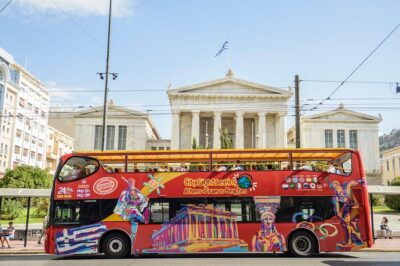

Essential Athens Full Day Private Tour – Best Shore Excursion
Read our review →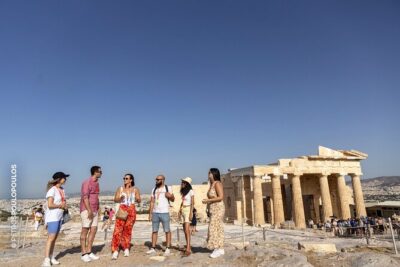
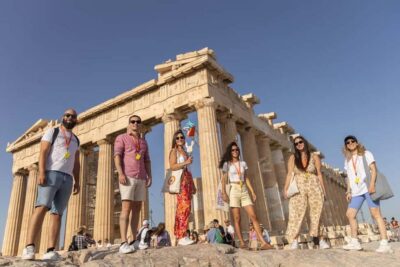
From Cruise Port: The Acropolis & Athens Highlights Tour
Read our review →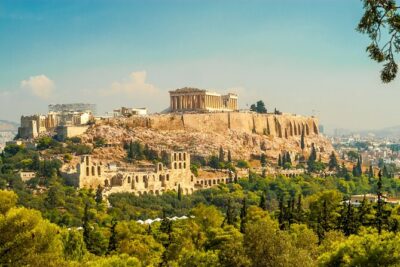
Athens for CRUISE SHIPS with opt. Acropolis from Piraeus Port
Read our review →
Embark | Disembark The Highlights Of Athens – 4 H Private Shore Excursion
Read our review →