
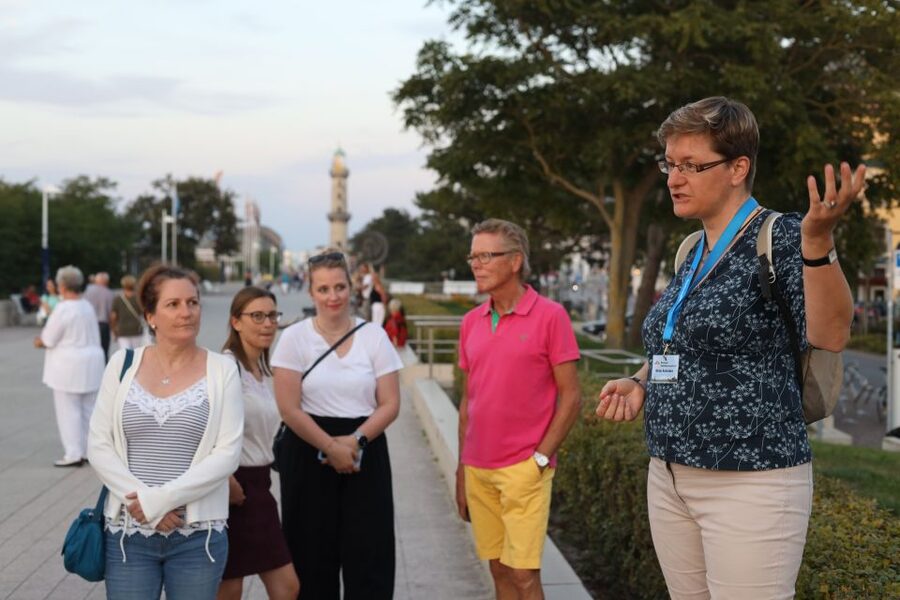
REVIEW · GERMANY SHORE EXCURSIONS
Warnemünde: Guided Walking Tour
Warnemünde’s appeal comes from its small scale. In 90 minutes, you move from old fishermen’s houses and the river to the beach, lighthouse, and the curved Teepott building. The tour also adds less obvious details, including the local fishing tradition and the geology beneath the sand.
I like the way this tour joins history with ordinary local life, rather than stopping only at postcard sights. I also like its focus on small details, the kind that can make a short walk feel worthwhile. The main limitation is clear: the tour is in German, and the attractions are seen from outside, so it may not suit you if you want museum visits or an English-language guide.
Key points to know before you book
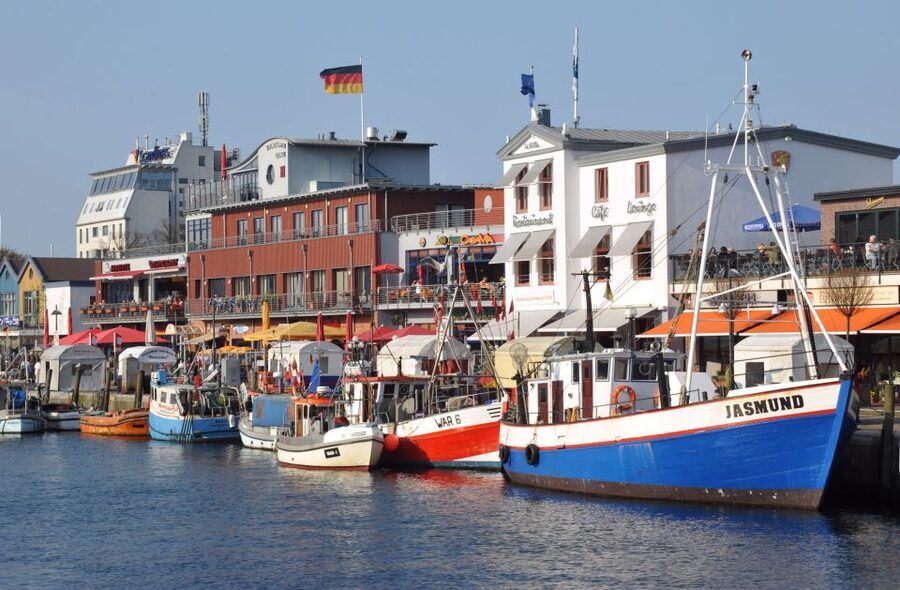
- Old fishermen’s lanes: Walk through Warnemünde’s narrow streets and see the traditional houses that give the resort its character.
- A walk with variety: The route links Bannhofsbrücke, the Alter Strom, the promenade, the lighthouse, the Teepott, and the beach.
- Local fishing customs: Your guide explains how Warnemünde’s fishermen once tried to lure their catch.
- A literary and artistic connection: The route passes the house once called home by Edvard Munch.
- Beach geology: You learn to look at Warnemünde Beach as a geological place, not only as a strip of sand.
- German-language format: The walk lasts 1.5 hours, costs $17 per person, and includes a local guide but no attraction admissions.
Why Warnemünde works well on foot
Warnemünde is compact enough for a walking tour to cover several different sides of town without transport. That matters because the resort’s character is found in the links between places: old lanes lead toward the water, the river opens into the harbor area, and the promenade brings you out to the lighthouse and beach.
I like this kind of introduction when a destination has more going on than its main postcard view. A quick look at the lighthouse alone tells you very little. Walking through the older streets first gives the landmark a setting and helps you see Warnemünde as a former fishing village, not just a seaside stop.
The route is also practical for a first visit. You get a broad orientation in 90 minutes, then you can decide where to return on your own. The walk does not ask you to spend time inside several attractions, so it keeps moving and fits neatly into a short stay.
You should expect a guided stroll rather than a formal sightseeing program. The supplied information does not give a group size or a detailed stop-by-stop timetable, so the pace and exact order may vary. The fixed promise is the mix of local streets, waterways, the beach, and the best-known waterfront sights.
More walking tours in Germany:
- Livorno: Florence Optional Walking Tour and Accademia Entry
★ 4.3 · 671 reviews - Juneau Shore Excursion: Helicopter Tour and Guided Icefield Walk
★ 5.0 · 536 reviews - Sydney Shore Excursion: Sydney Opera House Walking Tour
★ 4.5 · 160 reviews
Meeting at Rostock-Information Warnemünde
The meeting point is outside the Rostock-Information Warnemünde, at the corner of Alexandrinenstraße and Kirchenstraße. Take a moment to identify the street corner before the start, since the tour begins outside the information office rather than at one of the major landmarks.
This starting point places you near the older part of town. From there, the guide can take you into the lanes lined with old fishermen’s houses, where the scale feels more intimate than on the open promenade.
Your guide is a local and speaks German. That is important when deciding if this walk fits your plans. If you understand German, the language should let you catch the stories, local expressions, and small explanations that give the route its value. If you do not, you may still recognize the sights, but the tour’s historical and cultural content will be harder to follow.
The activity does not list transportation, so plan to meet the guide on foot at the stated corner. The walk itself lasts 1.5 hours. Wear shoes suited to city walking and the beach area, though the tour information does not specify a difficult route or special equipment.
Old lanes and the life of fishermen
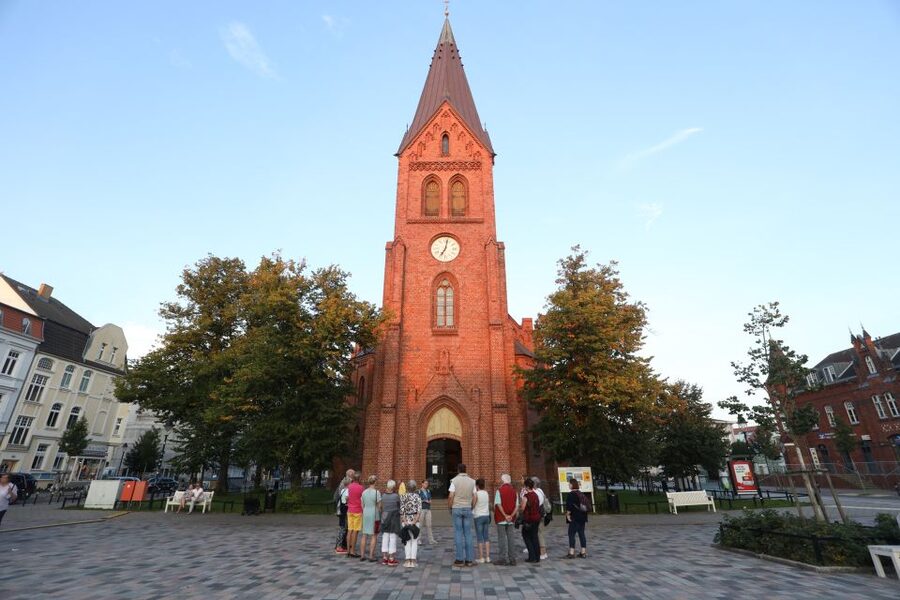
The first part of the walk introduces Warnemünde as a small fishing village before it became a popular seaside resort. The old fishermen’s houses are more than attractive backdrops. They help explain how close daily life once was to the water and how a village economy shaped the streets.
I find this the strongest way to begin. A guide can point out details that you might otherwise pass without a thought, then connect them to local customs. The tour specifically covers the way Warnemünde’s fishermen used to lure their beloved catch, an unusual detail that gives the fishing story a human and slightly playful edge.
That sort of anecdote is useful because it keeps the past from becoming a list of dates. You are not only looking at old buildings. You are hearing about work, local habits, and the practical relationship between residents and the sea.
Do not expect entry into historic houses based on the information provided. The appeal here is the street setting and the guide’s explanation. If you prefer indoor displays, this portion may feel light, but if you enjoy reading a place through its buildings, it should make the rest of the walk easier to understand.
Bannhofsbrücke and the old river
The route includes Bannhofsbrücke, the local bridge, and the old river, known as the Alter Strom. Water is central to Warnemünde, and this section gives you a clearer sense of the town’s working side.
A bridge is a simple stop, but it can be a useful one. From it, you can understand how the waterways divide the town and how movement between the older streets and waterfront has long shaped daily life. The Alter Strom also helps connect the fishing-village story to the modern resort.
This is where a local guide can add the most value. You can see the river without help, but you may not know why a particular bridge matters or how the water fits into Warnemünde’s past. The walk’s focus on small facts is especially useful here.
The tour description allows time to discover the Warnemünde Train Station and Neuer Strom too, if you wish. That wording suggests these may be optional additions rather than guaranteed, fixed stops on every walk. If either is important to you, ask the guide at the start how the route will handle them.
More guided excursions in Germany:
- For cruise passengers: Guided ATV Tour of Dutch & French St. Maarten
★ 5.0 · 1,552 reviews - Civitavecchia Port: Private or Shared Guided Tour of Rome
★ 4.4 · 826 reviews - Flam: The Wonders of Flam Guided Half-Day Shore Excursion
★ 4.8 · 668 reviews - Fuerteventura: Corralejo Sand Dunes Guided Shore Excursion
★ 4.6 · 335 reviews
The Edvard Munch House
The walk passes the house that Edvard Munch once called home. This gives the route a cultural connection beyond local fishing and resort history.
The information provided does not say that the house is open to the public, and entry to attractions is not included. Treat it as an exterior sight and a point of context rather than a museum visit. You may find the stop most interesting if you already know Munch’s work or enjoy tracing the places connected with artists.
Even as a brief exterior stop, the house adds variety. The route moves from village traditions to a personal connection with a major artist, then continues toward the open waterfront. That change in subject keeps the tour from feeling like one long explanation of buildings.
If you want an in-depth art-history experience, this walk is not designed for that. The Munch House is one part of a broader introduction to Warnemünde, not the main focus.
Lighthouse, Teepott, and the promenade
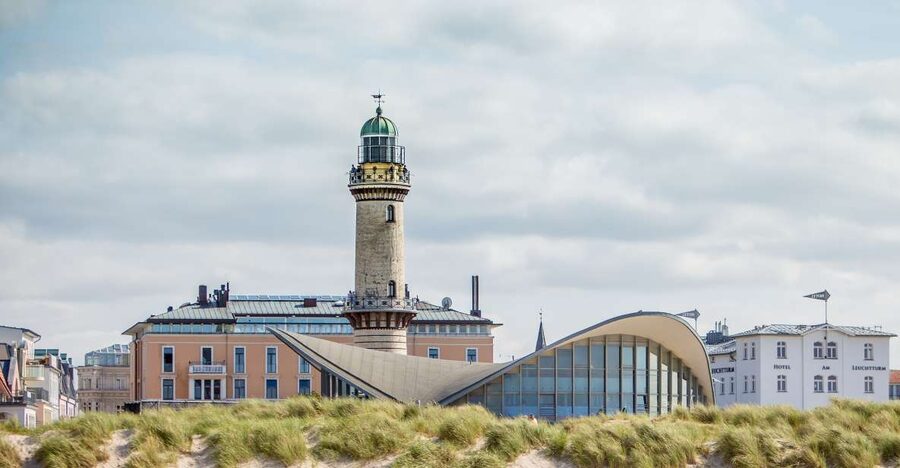
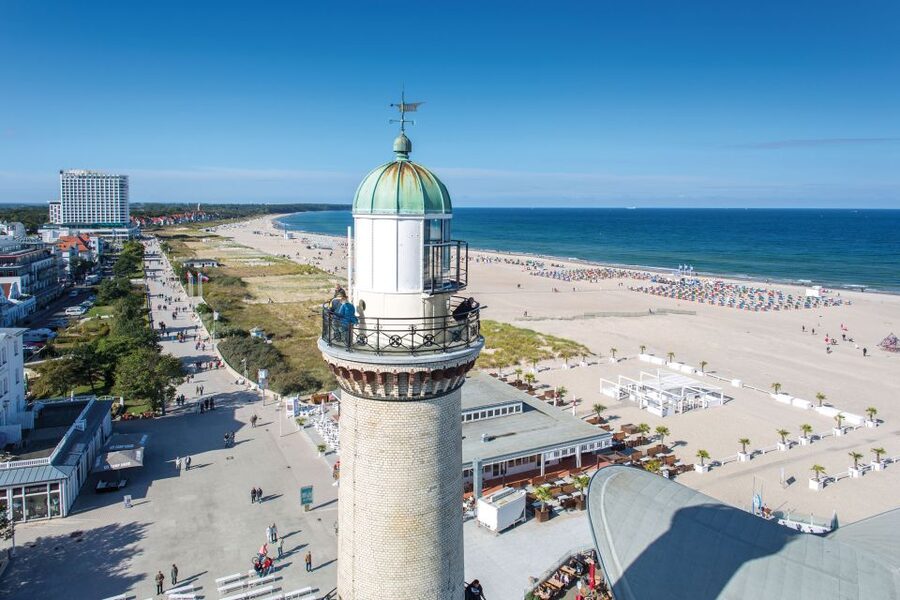
Warnemünde Lighthouse is one of the clearest visual markers on the route. You see it along the promenade, together with the Teepott, a distinctive building beside it. These are the places where the old town’s identity as a seaside resort comes into full view.
The lighthouse gives you an easy point of orientation between town, promenade, and beach. The Teepott adds a different note, with its recognizable form and connection to the waterfront setting. Your guide can place both sights within the story of Warnemünde rather than leaving you with a quick photograph and no context.
The tour does not include admission to attractions. That matters here because you should not assume the walk includes going inside the lighthouse or any other landmark. The supplied details promise that you will admire the sights from the route, not that you will enter them.
I like this arrangement for a short visit. You get the major visual stops without spending the entire 90 minutes indoors. After the walk, you can decide if one of the landmarks deserves more time, subject to opening arrangements and separate costs that are not specified here.
Seeing Warnemünde Beach through geology
The beach portion adds a useful change of pace. Instead of treating the sand only as a place for swimming or a scenic view, the guide explains the geology of Warnemünde Beach.
That is an appealing detail because it gives you something to notice after the tour ends. You may look more closely at the sand, shore, and coastal materials once you know what the guide is pointing out. The information provided does not name the specific geological features or explain the exact teaching method, so keep your expectations focused on an introduction rather than a technical field lesson.
This stop also rounds out the route. The old streets tell you about people and work. The river explains the town’s setting. The beach shows the natural side of the coast, while the lighthouse and Teepott represent the resort’s public face.
Weather may affect how enjoyable this part feels, as with any outdoor walk, but the activity is built around being outside. A coat or sun protection suited to the day will help. The tour details do not list special beach equipment or a separate beach activity.
What $17 buys you
At $17 per person, this is a modestly priced orientation walk. The price covers the 1.5-hour walking tour and local guide. It does not cover admission to attractions, so the value depends on how much you want explanation and local context rather than paid entry.
I see the best value in the range of subjects packed into a short time. You get village history, fishing customs, a bridge and river, an artist’s former home, the lighthouse, the Teepott, and beach geology. That is a good spread for someone arriving in Warnemünde with limited time.
The price is less compelling if you only want to photograph the main sights. You can see the lighthouse, promenade, and beach without paying for a walk. The $17 earns its keep through the guide’s stories, especially the small local details that are easy to miss on your own.
The tour provider is Visit Rostock. The activity allows free cancellation up to 24 hours before the start for a full refund, and you can reserve now and pay later. Those terms are useful if your schedule is still changing, though they do not alter the tour’s German-only format or its outdoor nature.
Who should take this walk
I would recommend this experience to you if you are visiting Warnemünde for the first time and want a fast orientation before exploring alone. It also suits anyone who prefers local stories, old streets, and public views over a schedule built around indoor admissions.
The walk should work well for a short stop because 90 minutes is long enough to cover the town’s main themes without taking up a full morning or afternoon. It may also help you decide where to return for more time, such as the riverfront, beach, lighthouse area, or train station.
German speakers are the natural audience. The live guide uses German, and the activity does not list other language options. If you need English, confirm before booking rather than assuming translation will be available.
You should choose something else if your main goal is entering attractions, getting a specialist art tour, or receiving a detailed geology lesson. This is a broad local walk. Its strength is the connection between many modest sights, not a long visit at one major site.
Small details are the real reason to go
Warnemünde has enough famous sights to fill a photo album, but the most useful part of this tour may be the information attached to ordinary places. A bridge, a narrow lane, or a house can seem unimportant until someone explains its place in local life.
The fishing detail is a good example. It takes the town beyond its resort image and reminds you that the waterfront was a workplace before it became a place for promenade walks. The Edvard Munch House adds another layer, while the beach geology shifts your attention from human stories to the coast itself.
That mix is why I would not judge this tour only by the number of landmarks. The route is valuable because it helps you read Warnemünde in several ways. You see the old village, the water routes, the resort architecture, the artistic connection, and the physical shore.
The top strength is this attention to small things. If you enjoy the feeling of getting your bearings through local facts, the tour offers a lot for $17. If you want only a polished highlight reel, the slower explanations may feel less necessary.
Should you book the Warnemünde walking tour?
Book it if you want a short, affordable introduction to Warnemünde and you understand German. The route covers more than the obvious promenade, with old fishermen’s houses, local fishing customs, the Alter Strom, Bannhofsbrücke, the Munch House, the lighthouse, the Teepott, and beach geology.
Skip it if you need an English-language guide or want entry to attractions. For everyone else, this is a sensible first walk, especially when you value the small local details that turn a pretty seaside town into a place with a story.
FAQ
How long does the Warnemünde walking tour last?
The guided walking tour lasts 1.5 hours.
What language is the tour conducted in?
The live tour guide speaks German. German is the only language listed for this activity.
Where is the meeting point?
Meet outside Rostock-Information Warnemünde, at the corner of Alexandrinenstraße and Kirchenstraße.
What sights are included on the walk?
The route includes Warnemünde’s old fishermen’s houses, Bannhofsbrücke, the old river, the Edvard Munch House, Warnemünde Lighthouse, the Teepott, and Warnemünde Beach. The Train Station and Neuer Strom may also be included if you wish.
Does the tour include entry to attractions?
No. Entry to attractions is not included. The tour allows you to see the sights along the walking route.
How much does the experience cost?
The listed price is $17 per person.
Can I cancel or pay later?
You can cancel up to 24 hours in advance for a full refund. You can also reserve your place and pay later.
Newly added around Germany
- From Kiel: All-in-One Hamburg Shore Excursion★ 4.5 · 2 reviews
- All-in-One Hamburg Shore Excursion from the port of Kiel★ 4.5 · 21 reviews
- All-in-One: Beautiful Lübeck: Shore Excursion from Kiel Port★ 4.5 · 50 reviews
- Hamburg Shore Excursion: Private Berlin Day Trip★ 5.0 · 6 reviews
- Deluxe Berlin Tour from Warnemunde or Rostock Cruise Port★ 4.5 · 11 reviews
- Warnemuende Shore Excursion: Private Berlin Tour★ 4.5 · 27 reviews
- Private All-in-One Berlin Shore Excursion from Warnemünde Port★ 5.0 · 35 reviews
- Warnemuende Shore Excursion: Berlin Private Sightseeing Tour from Rostock★ 5.0 · 4 reviews
Germany Shore Excursions, compared.

All-in-One Berlin Shore Excursion from Warnemunde
Read our review →
Best Berlin Shore Excursion from Warnemunde or Rostock Port
Read our review →
Rostock: Warnemünde and Rostock Half-Day Shore Trip
Read our review →
Deluxe Berlin: Hassle-Free Shore Tour from Warnemunde Cruise Port
Read our review →
Berlin & Sachsenhausen Concentration Camp Tour from Warnemünde and Rostock Port
Read our review →
All-in-One: Beautiful Lübeck: Shore Excursion from Kiel Port
Read our review →
Explore Berlin Shore Excursion: Top Attractions Private Tour from Warnemuende
Read our review →
Berlin and Sachsenhausen: Shore Trip from Warnemünde Port
Read our review →Browse the lists this tour appears in